Small hands
First rattles and teethers, sized for small hands
The smallest toys we sew do their work in a fist that cannot fully close yet. Every choice on this shelf follows from that fact.
Grip comes before everything
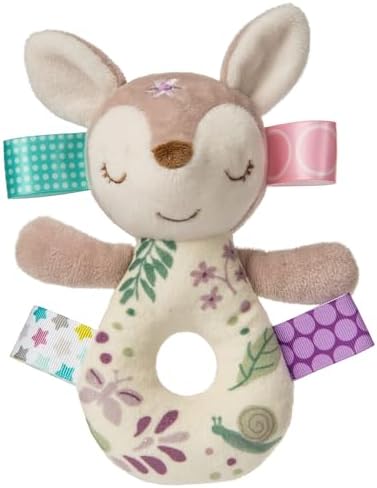
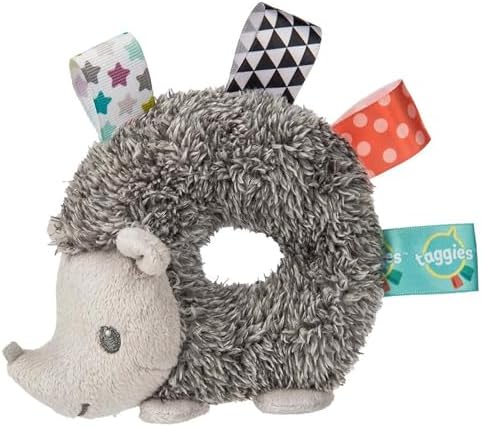
A hand that is weeks old holds by reflex, not by plan. So the pieces on this shelf are rings, sticks and paws thin enough to be trapped by curling fingers: mostly one to two inches across at the grip point. A big plush body defeats a small hand, which is why our rattles hang their character from a ring rather than being the character.
Weight matters just as much. Everything here is fabric-first and light enough that a wobbly grip can lift it without the toy winning.
Textures in one object
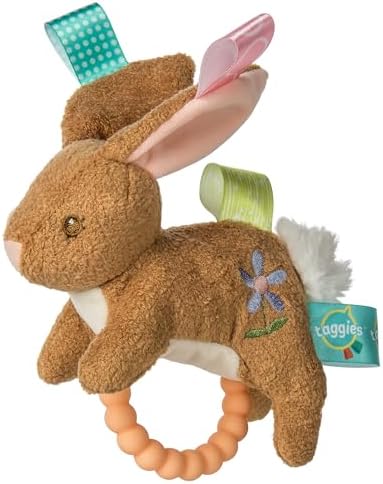
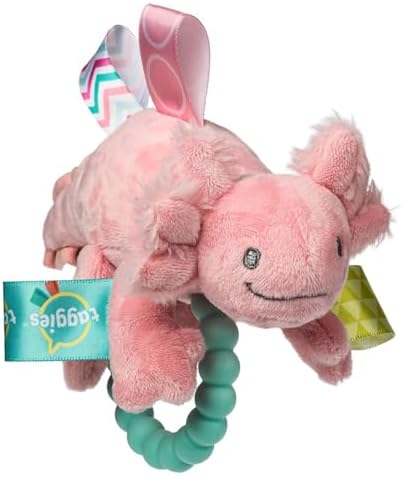
A typical piece mixes a smooth ring, a plush body, satin tags and sometimes a ribbed or dimpled edge. Mouths explore surfaces the same way fingers do, and the variety is the point: one object, four different answers.
The tags on this shelf are shorter than on our blankets, sized to the toy so nothing dangles past what the fabric body can support.
The rattle is a bonus, not the job
Most first rattles get shaken by accident long before they get shaken on purpose. The capsule sound rewards the accident, which is nice, but the daily work of these toys is being gripped, mouthed and dropped a few hundred times. Choose by grip and texture first and let the sound be the surprise.
All-fabric pieces on this shelf ride through a gentle machine wash. The ones with wooden or firm plastic rings are wipe-clean instead, and the care label says which is which.
Pick the piece whose thinnest part matches the smallest hand in the house, and the rest sorts itself out.